To All You Ordinary Heroes

The following is a portion of a blog post from Lisa-Jo Baker at Tales from a Gypsy Mama website. It speaks so truthfully about finding the heroic in ordinary lives that I wanted to share it. To read the full post, click here

Mountain LionTo All the Heroes – yes you, the ones up to your elbows in ordinary

We all want a hero…

We all want a hero to stand on a stage or a white horse or a battlefield or a football field or a bridge and declare to the darkness, “you shall not pass.”

We want to believe in courage bigger than us and the role models willing to leave their footprints behind for us to tentatively step into.

Prophets and rock stars, preachers and teachers and bloggers and poets. We want them to pour their words and point their lives like warning signs to the tired who come behind all bended over with our ordinary and expecting that others will triumph so that we can live in awe…

We want heroes with grand lives to sweep us up into their stories and propel us out to save the world through their endeavors while we stay home and fold the boring laundry.

And what if we are the heroes we are waiting for?

What if we can change and mold and challenge and fight back the darkness from our own corner of the Kingdom.

What if ordinary is heroic?

Most heroes I know wear jeans and T-Shirts most days and fight fevers more than Hercules.

Most heroes I know don’t have or care about blog platforms or their readership. They are too busy figuring out how to love their kids through a meltdown.

Most heroes I know are sitting right there in the pew behind us with their broken down daughters, their aging parents, their newborns who won’t sleep through the night, their singing off-key.

Most heroes I know are so ordinary we wouldn’t give them a second glance in the checkout line. They reek of homework and figuring out the taxes and how to squeeze a date night into another crazy week of car pool and sports and getting one more stain out of the carpet.

Most heroes I know are brave because they keep going in the face of their overwhelming fears, their worries, the voices in their heads that tell them they aren’t good enough, diligent enough, calm enough, prepared enough, or any other enough that can spit up out of the “perfect-o-meter.”

Eight women spend a morning cooking food for the friend who’s house was trashed by a hurricane, for the single parent who doesn’t have enough, for the family who will likely knock on the church door tomorrow…

There is no showmanship in heroism. There is just the next thing. Sometimes that thing might feel small – like helping your kid with his math homework. And sometimes it might feel big – like standing on a stage, or writing a book, or helping build a school or raising a million dollars or hosting a global webcast. But my guess is heaven uses a very different yard stick than we do.

So keep on, you.

Yes, you. The one up to your elbows in what feels like ordinary.

Lisa-Jo Baker believes “motherhood should come with its own super hero cape.” If you subscribe to her blog posts at www.lisajobaker.com, you’ll get her free eBook The Cheerleader for Tired Moms.

Live More, Fear Less: Test Anxiety (Can Work for You)

TestTaking2School has been back in session now for several months, and for many people that has meant lots of reading, studying, homework, studying, essays, studying…and the dreaded test days. When I was in school, I loved teachers who gave multiple choice tests – give me a list of answers to choose from and I’m in heaven. I probably don’t have to mention how I felt about math and essay exams.

Everyone knows the basic steps to prepare for test days: Study. Sleep. Eat.

  • If you know you suffer from test anxiety, you’re going to have to be more diligent than those who aren’t afflicted. Keeping up with reading assignments and homework is the first and best way to get ready in advance for an exam. Going into a test as prepared as possible will give you confidence and help ease anxiety.
  • Finding the time to get enough sleep every day is hard enough for those who aren’t going to school, for students it’s even worse. But if you don’t get at least six hours of sleep every night, you’ll be running on a sleep deficit, and that can affect your concentration. If you can’t do it on any other night, at least get a good night’s sleep the night before a test.
  • You have your own morning routine that may or may not include breakfast, but do your body and your brain a favor – eat well on test days, and include protein and not too much sugar.

If you’re not one of those (strange) people who thrive on the challenge of taking tests, you’ll need to take a few steps to make your test anxiety work for you.

Muscle tension, headache, faster breathing, increased heart rate and perspiration – these are some of the physical manifestations of fear related to the natural fight or flight response (see my post on survival instinct). If you have test anxiety, your mind has perceived your test as a threat to you and has prepared your body to stand and fight or run away. These physical changes can help you think more quickly, but they can also lead to restlessness because your body is now ready for action. If this is how your body normally reacts on test days, give these few things a try:

  • Be good to yourself. When you first start feeling these fight-or-flight symptoms, try to remember that your body’s natural defense will help you focus on what’s to come. Don’t fight it and don’t beat yourself up over your “silly” fears.
  • Arrive early at the testing place. Give yourself enough time to do some kind of physical activity like walking around the building or up and down the halls for a few minutes to help release muscle tension. (Arriving early is also essential to allow a bathroom break for those of us whose symptoms manifest themselves in that way.)
  • Breathe slowly and deeply to help you relax, before and during the test. This has a calming effect and sends oxygen to the brain.
  • To ease tension during a test, do some subtle stretching of your arms, legs, and shoulders. If you notice others tapping pencils/pens or nervously tapping their heels, realize you’re not the only one feeling anxious.
  • When taking the test, ponder the questions for only a few seconds and skip those you can’t answer immediately (math questions take longer, of course), and then go back later. Staying on one question for too long can cause even more anxiety and a loss of focus. In my student years, I found that as I moved through a test, my initial freak out/brain freeze cleared away enough that I was able to answer most of the questions on the second pass through.

These suggestions can be adapted to many situations where you’re being tested. Whether for a job interview, a presentation, or a talk: study in advance, get enough sleep, eat right, relax, release muscle tension, remember to breathe. And be good to yourself. When you don’t have the choice to flee, use your natural survival instinct to stand and fight.

How do you combat test anxiety?

Consult Not Your Fears…

Image

You Can’t Finish What You Don’t Start

I’m presently in the throes of NaNoWriMo (National Novel Writing Month) – along with over 250,000 people worldwide. In case you haven’t heard of NaNo, it’s “thirty days of literary abandon” where insane people commit to writing a 50,000 word novel in one month (that being November). Besides the obvious hurdles this kind of commitment will throw in many people’s paths – finding the time to write 1,667 words per day (especially with a job or school schedule), doing everyday chores (laundry, housework, bathroom visitation), cooking for the family, taking care of children, running errands and shopping, spending time with friends/significant others, sleeping – there is one major hurdle to contend with first.

But “hurdle” isn’t even the right word to describe this other barrier – it’s not the same kind of frame-like structure that a runner has to jump over but is easily kicked down. It’s not even a wall. It’s the mountain of the first step. Excuses are the foothills, they should be the easy part to overcome, but we often make them the hardest: I don’t have enough time or what if I can’t make it work or what if I’m not smart enough, and so on. What it all adds up to – this mountain, this dragon – is fear.

On the field of the self stands a knight and a dragon. You are the knight. Resistance is the dragon. The battle must be fought anew every day. ~ Steven Pressfield

By the end of today, I expect to have a total of 30,000 words toward my 50K goal. And because of my commitment (which many nights has left me asleep at the keyboard after midnight) and the sacrifice of all kinds of things for the cause, I’ll have the bones of a novel when November 30th rolls around. This first draft will need months of editing, revising, and rewriting. It will take a lot more work to finish…but I don’t want to think about that right now. I still have two weeks left that need my chained-to-the-keyboard-and-no-editing attention. I have to focus on this one step (broken into smaller 30-day bites) toward the greater goal of publishing the novel that this manuscript will someday become.

If I hadn’t pushed through all my what-ifs and decided to step up and give this everything I had, I wouldn’t be feeling pretty good about my writing goals right now. Life has a way of tossing obstacles in my path, things that can throw me completely off course. If for some reason I don’t make my NaNo goal by the end of the month, I will still be closer to finishing my first draft than if I hadn’t started at all. No matter what, I will have established a writing routine, and proved to myself that I can do what I set my mind on. And I’ll have a good start going into the new year.

We often let our fears and our excuses get in the way of even starting a thing. The first step toward doing something worthwhile can be the hardest to take, but it can also lead to all kinds of unexpected rewards along the way.

Heroes Among Us: An Interview with a Firefighter

The following is the first of my interviews with heroes I know, with the hope of revealing the ordinary aspects of a hero’s life and to help the rest of us recognize hero traits or tendencies in ourselves. The name of the interviewee has been changed for privacy sake.

Among the many things firefighters are known for, two things stand out the most – their courage and their cooking.

When I first met Dave the firefighter at a family gathering several years ago, I was immediately impressed by his quiet confidence, and then with his show of kindness and affection while he played with his children.

Becoming a firefighter was a natural career choice for him after finishing Emergency Medical Training (EMT) school and working an ambulance for seven years. Sixteen years after making that decision — and having worked his way up through the ranks, starting as a cadet — he’s now a captain with the fire department.

When I asked him how many fires or emergency calls he’s answered so far, he told me he didn’t know. And then he did the math and was amazed by the answer: well over 20,000 emergency calls over the course of his 23-year career. With all of that experience, Dave understands fear and courage. He attributes the ability to face the dangers in his job to training, saying, “All of the initial firefighters that engage in their first fire are VERY courageous…It takes a different type of being to become trained to the point of entering a building knowingly, realizing that death could take you. After the first fire, your comfort level increases.” Continuing to risk their lives becomes like clockwork after that, he says.

Though he agrees with the Moorish proverb that he who fears something gives it power over him, he also believes that sometimes fear is a good thing. It’s “what a veteran must realize when leading a crew, it’s that sixth sense to objectively analyze the situation and make a decision.”

One aspect of his job is keeping people calm in an emergency, and he has practical advice for dealing with others who are fearful: “Be a solid listener. Make a conscious effort not to…be distracted; make eye contact and ensure that the person you are listening to knows that they have your full attention.”

Dave defines courage as acting or performing for the best interests of others, rather than yourself. Like any good husband and father, his own fears or concerns center around his family. Getting injured while responding to an emergency or being caught up in a domestic violence incident on call could lead to not being able to provide for his family. He’s also concerned he might fail to instill strong ethics and morals in his children or to teach them to always do the right thing regardless of hurting someone else’s feelings. And he believes building confidence in children, that they can do anything, is the first building block of courage.

And what about the rumor that firefighters are good cooks? Chores, like cooking and cleaning, are typically shared in a firehouse. And just like the food at a truck stop better be good enough to please the truckers, food served at a fire station has to satisfy a hungry group of firefighters. Dave always enjoyed cooking green chile sausage gravy to complement biscuits and eggs when it was his turn to feed the “troops.” He was kind enough to share his recipe with us.

Green Chile Sausage Gravy (for 10 good eaters)

  1. Gather up a large pan that holds approximately 3/4 gal.
  2. Place one large “log” of spicy sausage in the pan, cook it down and keep some of the grease for flavor, strain the rest.
  3. Once the sausage is cooked, add in approximately 1/2 gal of milk, bring it to a boil.
  4. In a large cup, place approximately 4 cups of milk, slowly add flour until the contents are very thick, whisk it if possible, lumps of flour are yucky!
  5. When the milk and sausage contents are boiling, slowly pour in the milk/flour contents, until the boiling stops, then stop the pour and whisk the pot to further avoid clumps. Once the contents boil again, do the same. Key here is to do this a few times until the consistency matches your taste.
  6. Once you have the desired thickness, add in approximately three to four cups of thawed frozen HOT green chile. Let this simmer and stir for a few minutes and you’re good! Hint: If your chile isn’t hot enough, you can add black pepper to spice it up.

Lessons from Halloween

According to HalloweenSurvey.com a lot of Americans love Halloween: 72% celebrate it, 50% of adults wear a costume for the holiday, and over 8 billion dollars is spent every year to prepare for it. That’s a whole lot of scary love. The reverse statistics mean that 28% of the population either don’t care about it or don’t like Halloween. But whether you love dressing up and giving yourself over to the role of your favorite other self, or think the whole thing is silly, or believe that Halloween’s roots in evil practices are cause to shun the holiday, there are a few things we can probably all agree on:

1.  Everyone wears a mask sometimes. How many people do we show our real selves to? Probably only a few that we truly trust. And even if we are the upfront, this-is-who-I-am kind of people, we still have a tendency to hide our feelings. Anger and cheerfulness can both mask deeply felt pain. Remembering that everyone is wounded and scarred to some degree can make us more compassionate to those around us.

2.  Each day is what we make of it. Whether you believe that Halloween is loads of fun or just plain evil, the day is ours to take from it or give to it what we will. Just like every other day. Our days are good or bad because of the choices we make and how we decide to perceive life. No matter our circumstances, we are each responsible for our part in the making of every day we’re given.

3.  Life is sometimes tricky and sometimes a treat, but more often it’s something in between. We have great days and we have awful days. But life is lived mostly in the ones that fall between those extremes. These are the normal “okay” days that often seem to just creep along, filled with unremarkable hours – unless we take the time to really look for the remarkable in the mundane. Finding contentment right where we are – fun-size chocolate bars, anyone? – is something worth striving for.

How did you measure up to the Halloween statistics this year?

The Courage of Mothers

To me, mothers are some of the most courageous people I know. In every part of the world, they fight for and defend their children and their homes – many give their lives for both. Sacrifice is a daily offering.

Many women long for the experience of motherhood. They have a deep need to nurture a baby. Their mother’s heart will not let them give up even after the devastation of miscarriage or stillbirth.

Two years before I came into the world, my mother gave birth to my oldest brother. He was born with a handful of physical defects, one affecting his tiny heart. My mother brought him home to a newly painted nursery filled with a secondhand crib, crocheted baby quilts, and the hopes of motherhood. She cuddled my brother, loved on him, nursed him, and made his few days of life as comfortable as possible. Then she tried again – not to replace her lost son, but because she had a mother’s indomitable spirit, a mother’s heart that would not be stopped even by the heartbreak of loss.

It is easier for some people to understand what a mother goes through with the loss of a child she has held in her arms than the loss associated with a miscarriage. But the pain is no different.

In the following excerpt from the website Raising Paityn, Tiffany describes her experience with miscarriage. For the full post, click here.

The grief of a miscarriage is often a hidden pain…not soothed by platitudes…not soothed by logic…but time does bring clarity to grief. My baby is in a better place. I love to picture her in the arms of Jesus, her soul flying from the loving warmth of my womb to his gentle arms. It was an image that I think put me on the first step towards healing.

A piece of my heart is forever missing, flown away to heaven with my baby…I whisper words to the child I never met but I feel I know. I send hugs and kisses and love to the baby I still long to embrace…But for the moment, I sit with my loss in the comforting embrace of the night. Daylight is unfriendly towards grief; sunshine and warmth seem incongruous with the ache of sadness. In the dark, grief sits by me as a friend, acknowledging my right to shed tears and feel this ache in my heart. So I embrace it. No platitudes, no logic. Just tears that bring healing.

Some women will never physically bear a child, but their mother’s heart is evidenced by their love and nurturing of others, whether of adopted children, friends and family, or furry creatures.

And not all mothers are “good” mothers, not all live sacrificially for their children. But for those who do, they are true heroes. And for those who try again after miscarriage or stillbirth, I salute the courage and steadfastness of their mother’s heart.

Tumble-down Places

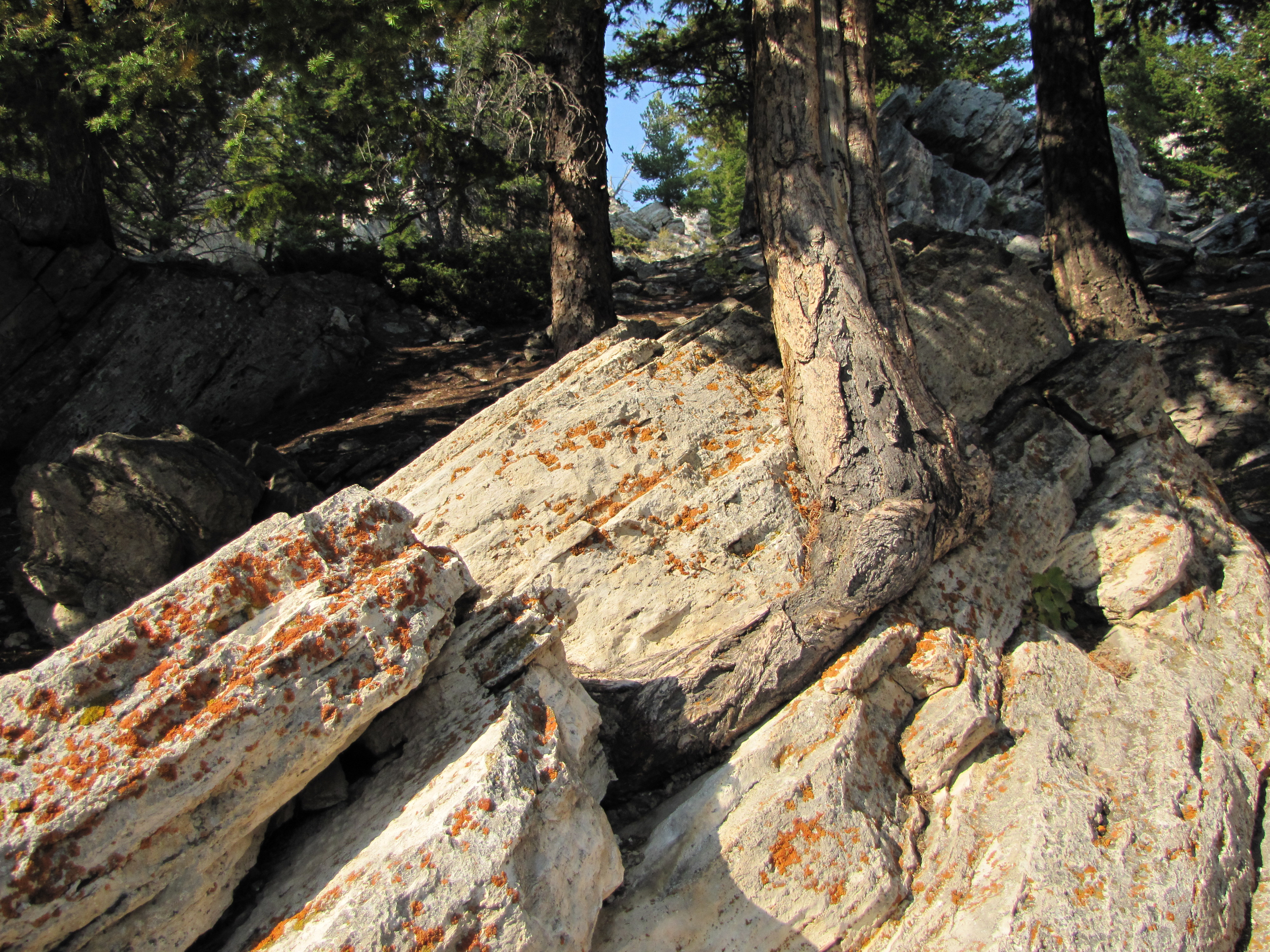
This summer I stumbled upon the Hoodoos (but not true pinnacle-type geologic hoodoos), “overturned, topsy-turvy” boulders covering about one square mile of Yellowstone National Park.

If there had never been a heaving up and throwing down of a once unbreakable mountain, the seed would never have found a place to cling. If the crack had been too narrow or too wide, it would have found a different path. If the sky had not sent just enough tears to sustain, if the sun beat too cruel and the winters clung too long, the seed would never have sprouted or survived.

If I had passed by with no desire to slow and return, I would not have stood, awed, by the jumble of rock and time. And without moving closer to see, I would never have noticed the tree whose trunk – the same color as the stone – grew out from the crack, over and around, then straight toward the sky.

I have wondered at a flower growing in the crack of a sidewalk, or on the jagged edge of a cliff, but this was different. This was a tree that had grown from a seed, against all if-then’s, everything coming together “just enough” year after year. But I knew it wasn’t chance that had brought it all together and placed it in such a place.

Though many had most certainly seen it before, at that particular moment it was just for me. This tree, once a seed, caught in the rumble and tumble of a broke-apart mountain, had been placed there for me to contemplate. Resiliency in nature. Beauty amid destruction. Life from death. Perhaps to show there is purpose in tumble-down places. And to marvel at the hand that made them.

Have you found the purpose to your tumble-down places?

Bullying: You Are the Boss of You

Nobody can make you feel inferior without your permission. ~ Eleanor Roosevelt

 As long as there are people who enjoy being cruel and have a need to dominate and control others, there will be bullies. Unfortunately, that also means there will be those who are the recipients of their physical and/or emotional aggression. Years ago, only two options were usually offered a child suffering from being bullied: fight back or ignore it. Adults tended to think it was a normal part of childhood. Nowadays, awareness of the extreme result of bullying (such as suicide) has caused parents, teachers, and school systems to take a more active role in preventing and dealing with schoolyard bullies through special programs and education.

There is also an abundance of books and movies for kids and young adults that deal with this issue. Books for parents and teachers, such as The Bully, the Bullied, and the Bystander by Barbara Coloroso give understanding and guidance regarding bullying – with insight into the role that a bystander (active or not) plays in supporting such behavior. In the book, suggestions are given on how to raise a child to have the compassion and strength of character to act on what is right if they find themselves as a bystander “even at great cost to himself.”

Eventually we all grow up and leave school behind, but schoolyard bullies often grow into adult bullies. This kind of behavior is less in-your-face physical and more subtle, but still just as harmful. It can manifest itself in its simplest form in a relationship where one person continually takes advantage of another through manipulation, often using the friendship (and the possible loss of it) as a weapon.

We can try to understand bullies. Most have a need to control because they have little control over their own lives – and those they perceive as weak or different become easy targets. Many are raised by dominating, controlling parents, and bullying can become a natural path. But no amount of understanding can excuse this behavior. Whatever the reasons, a bully chooses to treat people a certain way, just like the rest of us do.

As adults, we have choices that children may not have or may not know they have, or don’t have the strength to make. We can choose not to be bullied, deciding instead to avoid or ignore those kinds of people without harm to our once-fragile childhood hearts. We can end an unhealthy relationship with a controlling partner or friend. The power to change a situation that we’re unhappy with is within each of us.

The trick is remembering that change is as easy as you make it. The trick is remembering that you are the boss of you. ~ A.S. King

But things become more complicated when encountering bullying in the workplace. Our job might depend on getting along with that awful person giving us the stink-eye from the desk across the room. And if it’s your demanding supervisor…that’s an even tougher situation. We still have choices, whether it’s being nice to the person to keep the peace, confronting the person in an assertive but non-aggressive way, or taking the problem through the chain of command. If bullying turns into outright harassment, most workplaces have rules in place to deal with it. In any case, moving on might just save your physical and mental health.

But no matter what, keeping in mind where the fault lies is key. You do not deserve to be treated with scorn or disrespect. No one else is the boss of you, but you.

October is National Bullying Prevention month. What do you think is the best way to handle or prevent bullying?

Dealing with Fear: A Logical Approach

Worry does not empty tomorrow of its sorrows; it empties today of its strength. ~ Corrie ten Boom

Worry is a first cousin to fear – a wasteful, sneaky, whisper-in-your-ear kind of cousin. In my own quest to be less fearful, I’ve found the following strategies to be the most helpful:

Allow Yourself One Big Fear (and/or several small ones). And don’t beat yourself up over it. Fear can be normal and helpful (see my post on survival instinct). Everyone is afraid of something, even big, burly manly men – they just hide it better. I say, if you can carry on your daily life, moving forward more than you move backward, then your fear is not a problem.

Rehearse/Prepare. I don’t suggest we think about our fear or worry continuously – that might already be part of the problem. But consider what you’re really worried or fearful about. Afraid to talk to someone in person or on the phone? Write out what to say ahead of time. Are you actually afraid of the unknown in a situation rather than the situation itself? Before going on a job interview: research the job, the company, and ask yourself/answer possible interview questions.

Share. Don’t go it alone. If you’re worried about raising your kids, find mothers in your neighborhood, at church, at your child’s school to hang out with or talk to. Whatever the situation, talking to someone can help work through our fears. And chances are, someone is going through the same kind of thing or has already made it through the other side.

Pray. Some people don’t consider prayer logical. But belief in Someone greater than yourself, who cares for you and has the power to do anything, is a necessity of life these days. Prayer can chase away worry and bring peace to a troubled soul.  

Get Involved. Helping others, helps yourself. It takes the energy that your worry wastes and channels it toward someone or something that needs it more. There are people all around us that need help, many of them in worse places than we are.

Be Grateful. It’s been said that the fastest escape from worry is appreciation. Imagine how good we could feel if we spent our time appreciating what we have in life instead of wasting it on worry. For ideas on making gratitude a habit, go to my post Have a Grateful Day.

Act. Doing something is really what this list is about. Anything that causes worry should be acted on, not just thought about. Even the smallest action can alleviate fear. Make a list, make a plan, make a phone call. Go on the internet and do research.

Inaction breeds doubt and fear. Action breeds confidence and courage. If you want to conquer fear, do not sit at home and think about it. Go out and get busy. ~ Dale Carnegie

These are just a few suggestions, but if worry or fear has taken over your life to the point that you can’t leave the house or if you’re overwhelmed/depressed and are having trouble carrying on, please talk to someone – seek out a listening ear at your church or with a health care professional. Sometimes we do need help outside ourselves, and that’s okay. We weren’t meant to go through life alone.

How do you deal with worry?