Unknown's avatar

About Cate Macabe

A writer of speculative fiction.

The Best Advice for Coping with the Holidays

There are no advent police. There are no family traditions enforcers. There are no report cards given on the kind of memories you’re making. Sometimes doing less is the best gift a tired mom can give her family. Simple. Simple. Simple. Keep it as simple as works for you. And if all you do is give everyone a cup of hot chocolate now and again – including yourself – you are winning. ~ Lisa-Jo Baker

ChristmasTree With SnowflakesLisa-Jo Baker gives wonderful advice for moms on her Surprised by Motherhood blog, but these jewels should be snatched up by everyone, not just by mothers.

“Keep it Simple” is a maxim we often hear but usually ignore. It’s one piece of advice we should repeat to ourselves as often as necessary during hectic holidays no matter the time of year.

Lisa-Jo also offers The Tired Mothers Holiday Creed “for the days we are running on empty… For the days we’re sure anyone else would do this job better. Host this family more calmly. Have a house more presentable.” Here are seven of my favorite points from the list of twenty. You’ll also find a printable version at the end of her post.

  • I shall accept that a messy house at peace is better than an immaculate house tied up in knots.
  • I shall remember that guests will only feel as comfortable in my home as I feel in my own skin.
  • I shall embrace the fact that in becoming a mom I traded perfect for a house full of real.
  • I shall pause between preparations to savor the celebrations.
  • I shall remember that hospitality is about opening the door, not about how fancy the furniture, decor or dishes.
  • I shall treat myself with the same grace I offer everyone else.
  • I shall not be intimidated by how the holidays, the turkey, the tree or the memories “should” be celebrated but love the people I’m celebrating with instead.

What advice do you follow (or wish you did) for making holidays more enjoyable?


Image (Christmas Tree With Snowflakes) courtesy of jannoon028 at FreeDigitalPhotos.net.

The Quiet Voice of Courage

CourageTomorrow

Courage doesn’t always roar. Sometimes courage is the quiet voice at the end of the day saying, “I will try again tomorrow.”
~ Mary Anne Radmacher

Use NaNoWriMo to Meet Your Nonfiction Writing Goals

NaNoWriMo CrestHave you met your writing goals for the year? No motivation, no writing routine? It’s almost the end of the year – are you thinking, “Why bother now?”

No more excuses. Now is the perfect time. And meeting your goals, getting motivated, and starting a writing routine are perfect reasons to try National Novel Writing Month (NaNoWriMo) this year. Join hundreds of thousands of writers who dive into a writing frenzy beginning November 1st with the goal of finishing a 50,000-word draft by midnight on the 30th.

“But…but I’m not writing a novel,” you say.

No problem.

Be a Rebel

Don’t let the term “rebel” scare you off. Some rules just beg to be broken. According to WikiWriMo.org:

A NaNo Rebel is a NaNoWriMo participant who chooses to write something besides a novel of at least 50,000 words from scratch in November. Some NaNo rebels choose to continue a novel…while others wander into the worlds of nonfiction, video games, scripts, and academic writing.

Use NaNoWriMo to suit your project. Memoir. How-to book. Personal essays. A year of blog posts. If you have one or more nonfiction projects you’ve been busting to start or finish, then becoming a NaNo Rebel is for you. Writing 50,000 words in 30 days is a huge accomplishment and one to be proud of, even if it’s not the draft of a novel as NaNo was originally intended.

Joining NaNoWriMo is Easy, and Free

Sign up here, define your novel (as a Rebel, ignore the term “novel”), and start writing on November 1st. Whether you reach 50K words or not, you are eligible for sponsor offers as a participant, such as Scrivener at 20% off. If you want to be eligible for winner offers (50% off Scrivener, for example), validate the word count of your “novel” by November 30th.

Along with perks at the end, you’ll get plenty of encouragement along the way with pep talks, writing resources, forums, and virtual write-ins. And you’ll have the chance to meet other participants and attend “real” write-in events (check out your region for these).

Two Undisputed Rules

Whether you win NaNoWriMo the traditional way by writing the draft of a novel or by going the Rebel route and breaking the rules, follow these two unofficial rules to reach your goal:

  • Just Write (to watch your word count soar), and
  • Don’t Stop to Edit. The goal is a first draft in thirty days. You’ll have plenty of time to edit later.

Still on the Fence?

  • Find out more about NaNoWriMo on this page, including its nonprofit status, mission statement, and a list of published WriMos.
  • Check out this NaNo forum for Rebels.

Be a Rebel – finish the draft of your nonfiction project this year!


If November doesn’t work for you, plan to join Camp NaNoWriMo in April and/or July (see “Accomplish Your Writing Goals with Camp NaNoWriMo“).

Summer Break 2014

LittleGirl_ID-100246232I checked my to-do list last week and tried to decide how to get everything done that needs doing this summer. I came to the quick conclusion that I need to take my annual break from blogging a bit early this year.

Besides twice-a-week conditioning hikes (building up to six hours a day) for a Scotland hiking vacation in late summer, here are a few things I hope plan to accomplish during the break:

  • redesign the book cover for This New Mountain
  • start on the second draft of my fantasy novel The Last Bonekeeper
  • finish a short story collection for publication
  • enter a handful of contests
  • dive into webmaster duties for SouthWest Writers
  • spend two or more days a week with my granddaughter (fun times!)
  • take several weekend holidays around the state of New Mexico (go to my Pinterest board to see some of the neat places I hope to visit/revisit with my husband)
  • prep two bedrooms for upcoming family visits (I’m sure you’ve heard of junk drawers – these are junk rooms)

I’ll be posting off-and-on in the next few months, especially if I have a finished book cover to share. Have a great summer!

So how about you? Are you planning a crazy summer this year or hoping for a real break?

————————
Image “Little Girl” courtesy of Naypong / FreeDigitalPhotos.net

Writing Process Blog Hop

Blog Hop2Blog hops are a great way to share sites and bloggers we love and to be introduced to new ones we’ll come to love. I’m honored that Diana Jackson thought of me when she needed another blogger/writer to nominate. Until now, I haven’t been able to participate because of time issues, but she made it easy to say “yes” – I could pick my own date to continue the hop.

To begin my part of this Writing Process Blog Hop, I’ll introduce you to Diana. Then I’ll answer four questions about my writing and finish with three author/bloggers who will continue the hop.

Diana JacksonDiana Jackson

Diana became a lover of the written word in her late teens, not only reading but writing stories and poems. Although a home counties of England girl – born in Surrey, grew up in Hertfordshire and now living in mid Bedfordshire – her heart has never been far from the sea. When she discovered her family roots in the Channel Islands, UK, she began an unrequited love affair, especially with Alderney and Guernsey.

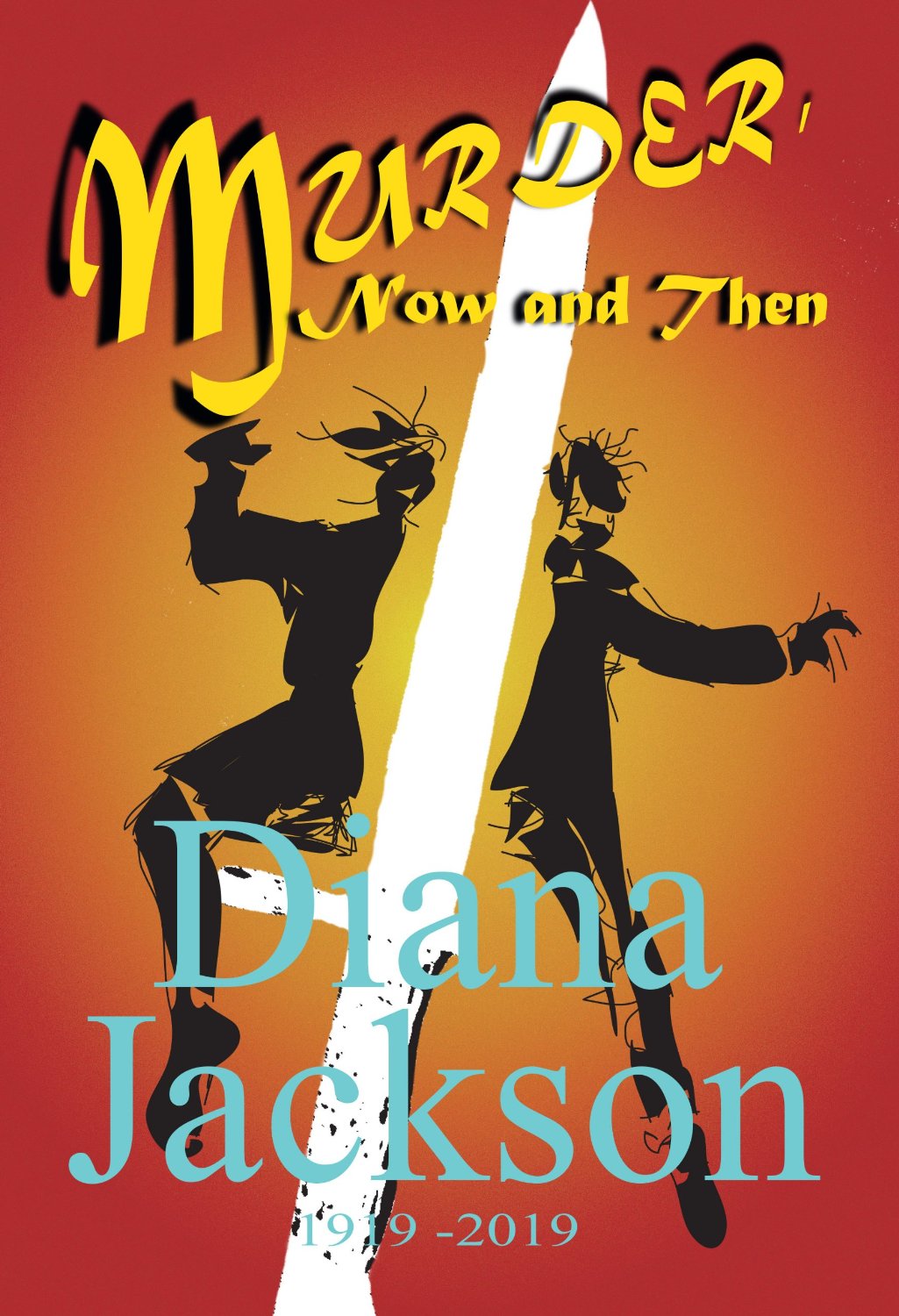
Murder Now and ThenShe has published several novels, as well as the memoir of 103-year-old Norman Campbell, The Life and Demise of Norman Campbell (his chosen title!). Her Riduna Series, Riduna and Ancasta Guide Me Swiftly Home are historical fiction with strong links to the islands and to Hampshire, where her parents were brought up. Her most recent novel is a murder mystery set in the heart of Bedfordshire. A sense of place is important in all of Diana’s novels and whilst writing Murder, Now and Then she enjoyed exploring the hidden gems of this little-known county which she calls home. She was originally inspired by a 1919 unsolved murder near the village of Haynes in Bedfordshire, UK, not far from where she lives. Murder, Now and Then is a back-to-the-future novel set in 2019, written with flashbacks to 1919. A sense of family history, or family mystery, threads its way throughout the novel, thus combining many of Diana’s interests. (Her books are also available in the U.S.)

You can meet Diana at dianamj.wordpress.com where she explores the background to her novel writing and selectionsofreflections.wordpress.com, devoted to true stories of life, love and messages of hope, including guest posts and stories of her old friend Norman Campbell. You can also find her at dianamaryjackson.co.uk, @Riduna on Twitter, and Facebook.

4 Writing-Related Questions

1) What am I working on?
My fantasy novel The Last Bonekeeper is in its first draft. While it continues to percolate, I’m working on a collection of short stories in the same universe. Writing these short stories has helped me understand the Bonekeeper world I created with its people, customs, and rules that govern it all. I’m also in the process of redesigning the book cover for This New Mountain, the memoir of private investigator AJ Jackson. Casa de Snapdragon Publishing used my suggestions for the original cover two years ago, but I’ve learned a lot about cover design since then. I want to bring more movement and relevance to it now.

2) How does my work differ from others of its genre?
Though it’s a classic tale of good versus evil, I believe I have a unique world in The Last Bonekeeper – its setting, characters, and a different take on magic. For This New Mountain, I wrote the memoir in AJ Jackson’s “voice” complete with clichés and country wisdom. What sets the book apart most is AJ Jackson herself – private investigator, ex-gun dealer, former mental patient, descendant of a great Choctaw chief, and grandmother.

3) Why do I write what I do?
I love to create my own science fiction and fantasy worlds and watch my characters move about and interact within them. One of the most exciting things is to have a character step off the path I’d planned for him. When that happens, all kinds of things are revealed, such as threads I hadn’t consciously thought of, secrets a character has kept hidden, or gems that make the story fuller and complete. On the other hand, This New Mountain was a twelve-year labor of love. I wanted AJ to realize her dream of sharing her struggles and adventures in a published memoir.

4) How does your writing process work?
When I sit down to create worlds, I see characters move through their world, hear their conversations, feel their emotions, and then transfer it onto the page. I start a fiction project as a pantser (writing by the seat of my pants), usually with only a visual of the world and a few characters, and the beginnings of a story idea. After two or three chapters I know where the story is going and how it will end – that’s when I start a flexible outline. I tend to edit as I go instead of pushing through a first draft without looking back. This means it takes awhile for me to have a completed draft. By that time I’m ready to put the project aside and start on something new. That’s where I am with The Last Bonekeeper and why I’m writing the short stories. Alpha readers, beta readers, and editors are also part of the process. This New Mountain, being nonfiction, was written in a more conventional way using outlines upfront to plan the memoir. For more about how I put the memoir together, see “Writing Readable and Compelling Memoir” on Diana Jackson’s blog.

Meet Three Other Author/Bloggers

Joyce_Hertzoff_PhotoJoyce Hertzoff

Joyce was born and raised in New York City, graduating from Queens College (a part of the City University). She’s been married for 49 years and has two grown children, one daughter-in-law, two granddogs, two grandbunnies, and three grandcats.

She retired after 45 years in the scientific literature field before turning her hand to writing fiction. Her first novel The Crimson Orb, the first installment in the Crystal Odyssey fantasy series, will be released on June 17, 2014 (Phantasm Books).
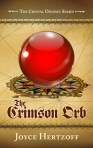
The Crimson Orb Cover2Besides writing, Joyce loves to read and knit, and also crochet. She admits to watching too much TV. When her husband retired in 2008, they moved from Ohio to New Mexico. Since then, they’ve enjoyed exploring the southwestern U.S.

You can find Joyce on her website at joycehertzoffauthor.com, her blog at hertzoffjo.blogspot.com, and on Facebook. Find out more about her book at fantasybyjoycehertzoff.com.

Peter_Mallett_PhotoPeter D. Mallett

Peter lives in Virginia not far from the ocean, but he can’t quite hear the waves from his home. He’s been writing since childhood. He also enjoys drawing, photography, and helping others with their goals.

He sold his first short story in 2002 to Kid’s Ark Magazine. Later, he sold two short stories to Tyndale Kids for “The Young Believer’s Case Files,” published in 2003. He’s been blogging since September 2012 and has written articles, short stories, greeting cards, and inspirational pieces. An article he wrote for his blog in January was later included in the Southwest Writers’ Newsletter (May 2013).

On his blog, Writing in Color, Peter expresses his thoughts on writing and encouraging people who want to write better for their profession or their pleasure. Many have encouraged him, and he wants to give back. He trusts in the power of words, but more importantly he believes in people. His writing style is lighthearted and encouraging. In fact, motivation and creativity are themes he revisits often. Some posts are short (300-600 words) and some are longer (600-1200 words), but he tries to make sure none of them are longer than they need to be. He says, “I take pleasure in shooting unnecessary words.”

Here are a few of his favorite posts:
Writing: For the Love of Words
A Tribute to People
What to Do on Dark Days When Words Do Not Come

Find out more about Peter at Writing in Color. You can also find him on Twitter, Pinterest, and LinkedIn.
Patricia_Woods_PhotoPatricia Woods

Patricia is a former award-winning journalist and editor. Her work appears in newspapers, regional and national magazines, academic journals and online publications. Her background also includes years as a classical pianist and organist, vocalist, choir director, and piano teacher to adults. She writes about business, personal finance, money management, small business, agribusiness, and occasionally on the arts, especially music. Working from home now, Patricia uses two ancient computers, dog-eared leather journals, scraps of paper and sometimes the cell phone. She’s been known to still employ a manual typewriter when the fancy strikes.
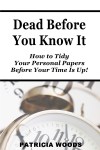
DeadBeforeYouKnowItShe is the author of several books including the newly released Dead Before You Know It (How to Tidy Your Personal Papers Before Your Time is Up), available at Amazon in paper and on Kindle. Dead is the first in a series of Helpful Little Books®, books that provide practical solutions to the daily problems of living in the twenty-first century world.

Writing daily in the morning and at every chance on the fly, she agrees with James Michener’s saying about writing: “I love the swirl and swing of words as they tangle with human emotions.”

“Everyone has a story to tell and that story continues right up until we take our last breath,” she says. She believes God is the Great Storyteller, and thus we are also Storytellers by nature in the very core of our being.

Patricia lives in Albuquerque, New Mexico, with her family and a special needs dog who is deaf. She also has an imperious cat who owns the computer keyboard and all the pens in the house. Her spare time is devoted to books, music and all types of needlework while she watches endless BBC mysteries and dramas. Despite no real soil to speak of, scorching heat, springtime hail, locust plagues, and no rain from heaven, she grows heirloom tomatoes and other vegetables.

You can find Patricia at her website patriciaawoods.com and @PatriciaAWoods on Twitter.

When Diana Jackson first tagged me for this Writing Process Blog Hop, I followed the links back to the others who came before me and found new bloggers to follow, all with a unique way to approach the writing process. I hope you’re inspired to do the same.

What are your experiences with blog hops? If you’ve never joined one, have you ever thought of starting one yourself?

Words to Live By

Maya Angelou offered healing in her words of peace and grace. She left our world a much better place.

MayaAngelou1

Book Review: “Outlining Your Novel” by K.M. Weiland

The following book review was originally published in SouthWest Sage, December 2013, and is reprinted here by permission of the author.


Outlining Your Novel: Map Your Way to Success by K.M. Weiland
A Book Review by A.R. Aeby

OutliningYourNovelJ.K. Rowling spent years plotting out the Harry Potter series. J.R.R. Tolkien had the curious habit of starting over whenever he hit a snag in his writing. Earnest Hemingway had a noted love affair with the bottle that directly influenced his life and writing. And at some point each of these acclaimed writers needed to sit down and take the story that was swimming around in their head and commit it to paper. How they made it through the process with a fully fleshed out and dynamic novel only they can tell you. But it is a universal step for all writers. At some point, you as a writer will have to figure out what process works best for you to transfer the story idea from your mind and make it into an actual book. In Outlining Your Novel, Weiland provides basic tools to create a roadmap for your story to follow.

As I sat down to read Outlining Your Novel, I was ready to be told the virtues of outlining—as even the least discerning person could expect from the title. I, of course, already thought I knew the merits of this process for story creation. As an outlining fan, all I really expected was a little ego stroking with the knowledge I have been doing it right—at least this part—all along and that the whole pantsing method (basically writing from the seat of your pants) was the doom of writers the world over. Now, before you start getting all judgey, let me just say at times we all need to hang onto that one thing we get right to keep us moving forward, and the fill-in-the-blank outlining process is mine. After that everything else about my writing is kind of a crap shoot. However, Weiland had more to say about outlining than I expected. She showed me that it was more than dry Roman numerals, stark words and my usual methods. Outlining is actually a very useful tool that can be shaped to fit your own style and taste. With her suggestions even the most free-spirited writer can have focus, and we type “A” personalities can introduce a little more flexibility.

The right method for the individual writer is not a one-size-fits-all, and Weiland openly strives to help you find yours. From detailed outlines to a short reference page, mind maps to post-its on a wall, the right way to outline is what works best for you. When you sit down to outline, the idea is to be focused, but to avoid rigid adherence to the outline. Weiland advocates structure, but also makes allowances for change and organic writing to be included. The obvious benefits of preplanning include avoiding those nasty story holes, dead ends and other unsightly things that will take away from or ruin your story. The end goal of outlining is to have your story, characters, and plot fully thought out and planned so the actual writing is the easy part.

This book is very manageable at less than 200 pages, a fairly quick and easy read but still thorough. Weiland is incredibly well organized—as to be expected—with a clear, concise and straightforward writing style. I wouldn’t call this book dry or boring by any means, but just a warning: it is not written to entertain, just inform. I love that the chapters are outlined in the table of contents. She gives point-by-point explanation of different tools and approaches for customization, while providing a multitude of examples, especially from her own process as a writer. She even mentions appropriate times for pantsing, like when you get stuck. The sections interviewing other published authors on their process—such as Becky Levine, Aggie Villanueva, and John Robinson—really helped me rethink what can be improved in my own process and ways to develop the weaker areas. She also mentions some writing programs and internet tools that were new to me, and I look forward to utilizing them.

I have to say this wouldn’t be a great first how-to for writing. Having a good grasp on story construction is fairly key, and some ideas about character construction along with an actual story idea are needed before diving into the outline. I suggest giving this book a thorough reading before trying to apply it to a particular project.

K.M. Weiland is active as both a mentor to other authors and a published author. Her other writing book Structuring Your Novel: Essential Keys for Writing an Outstanding Story and her website Helping Writers Become Authors are very nice accompaniments to this book. Weiland also has an instructional CD called Conquering Writer’s Block and Summoning Inspiration. She is a writer of speculative and historical fiction. Among her credits are A Man Called Outlaw, Behold the Dawn, and Dreamlander.

The creation process is a very individual thing. What worked for J.K. Rowling, J.R.R. Tolkien, and Earnest Hemingway probably won’t work for you—especially that whole love affair with the bottle thing. But as a writer, finding the right process for you is a crucial step to becoming an author. This process is ever evolving over the life of your career, and Outlining Your Novel will help give you new ideas and refine old ones so you can have the novel of your dreams.

AR Aeby_2A.R. Aeby received a Bachelor of Arts in history almost solely from the love of stories, even nonfiction ones. She is the author of the book review blog Whymsy Likes Books, where her goal is simply to share her passion for books. But she is a book author with the eternal hope of becoming a published book author. She lives in the deserts of New Mexico with her two young daughters and her husband of ten years. Visit her blog at http://whymsylikesbooks.blogspot.com.

Writing a Memoir Like a Novel: Passive vs. Active Voice

ID-100174671Whether composing fiction or nonfiction, writers should be concerned about the strength of their sentences reflected in word choice, as well as structure – and that usually means using active voice (or construction) instead of passive.

According to The Elements of Style, “the active voice is usually more direct and vigorous than the passive,” and, “The habitual use of the active voice…makes for forcible writing. This is true not only in narrative principally concerned with action, but in writing of any kind.”

I’m not a grammar geek, so this is not a grammar lesson – go to Ashlyn Macnamara’s post for that – but here is a quick refresher: In active sentence construction, the subject performs an action, making the subject the most important part of the sentence (subject, verb, object). In passive construction the subject is receiving the action, making the object the most important part of the sentence (object, verb, subject).

In the following simple examples, it’s clear that active construction is less wordy, less awkward, and more straightforward than passive.

Active: Frank ate the ice cream cone.
Passive: The ice cream cone was eaten by Frank.
Active: The teacher asked Jenny to stop yelling in class.
Passive: Jenny was asked by the teacher to stop yelling in class.

Writers are often cautioned that the use of “to be” verbs – such as is, am, are, was, were, has, have, had, be, to be, and been – equate to passive voice. But in the strictest sense, “Frank was eating the ice cream cone” is not passive construction because of the subject/verb/object structure.

However, just as the use of “by” (eaten by Frank) in the previous examples points to passive sentences, a “to be” verb such as was often indicates a place where writing can be strengthened. The same is true of using a “to be” verb along with a verb + “ing” ending (was eating).

The difference between an active-verb style and a passive-verb style – in clarity and vigor – is the difference between life and death for a writer. ~ William Zinsser

The following is a paragraph I wrote as an example of passive voice and overuse of “to be” verbs.

Jake was running along his favorite path that led through the forest. Birds were singing overhead and squirrels were climbing the trees. Jake knew this was the best way to be constructive with his time in solving his problems. Today an article needed to be written for his journalism class about the different ways that quotations are being used in dialogue. Using double quotation marks is how Americans write dialogue. Single quotes are used by British writers. And a new way has just come along – not using any quotation marks at all. If there was only one way to format dialogue, Jake’s life would be much easier.

Here is the same paragraph strengthened with more specific verbs (jogged vs. running, chirped vs. singing, etc.), most of the “to be” verbs removed, and taking a more direct approach to convey ideas. This isn’t a perfect rewrite, but the result is more concise and uncluttered.

Jake jogged along his favorite path through the forest. Birds chirped overhead and squirrels skittered through the trees. Jogging in the outdoors always helped Jake solve his problems. Today he needed to write an article for his journalism class about using quotation marks in dialogue. Americans use double quotation marks. The British use single quotes. And the newest way does not include quotation marks at all. Jake’s life would be easier if the world decided on one standard way to format dialogue.

In the following example from one of my fantasy works-in-progress, “had” signals a place where a sentence can be strengthened. (Thanks to a critique by Kirt Hickman who suggested ways to fix passive construction in my early writing.)

The shadows, bloated and heavy, held fast to stone and vine, but Digger had the Sight and nothing moved yet in those depths.

Rewrite:

The shadows, bloated and heavy, held fast to stone and vine, but Digger’s sight penetrated even those. Nothing moved yet in their depths.

It’s not possible, or suggested, to rid our manuscripts of all “to be” verbs or to be rigid in using only active construction. But the suggestion I take seriously is to be aware of how I construct my sentences and to make conscious choices accordingly. Sometimes I’m able to catch passive voice as I write, but the editing phase is when I find most of my problems. I do a search of those words I know I overuse (like was or had) and then decide if I can strengthen a sentence by substituting a stronger, more active verb or noun.

[T]here are going to be times when the passive voice is exactly the right thing for the sentence. It might be more appropriate for the situation. Like so many things in writing, it doesn’t matter what you do, as long as what you’re doing is exactly right for what you’re trying to say. ~ Janice Hardy

Good writing is made up of many elements layered or woven together into the whole. If you’re like me, you’re still learning and weeding through all that advice thrown around the Internet. Here is one of the best worth considering:

I write as straight as I can, just as I walk as straight as I can, because that is the best way to get there. ~ H.G. Wells

Is passive voice a problem you deal with in your writing?


You might want to check out the following regarding passive voice:
Janice Hardy, “Passive Aggression: Avoiding Passive Voice
Liz Bureman, “When You SHOULD Use Passive Voice
Bartleby.com, from the Elements of Style, 11. Use the active voice.

————————
Image “Digital Equalizer” courtesy of panupong1982 / FreeDigitalPhotos.net

My Mother Wore Combat Boots

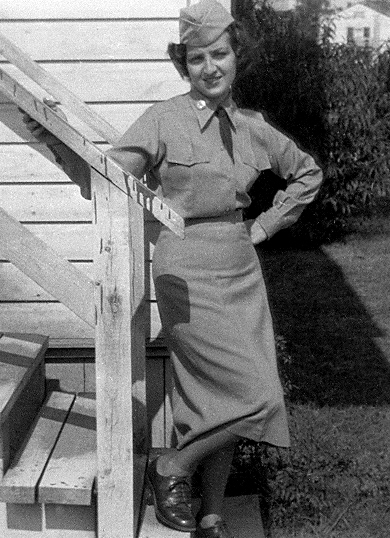
PVT Audrey Salerno, Camp Lee, VA, 1949

At some point in the early 1960s, a classmate on the playground yelled at me, “Your mother wears combat boots!” I don’t remember why this child said such a silly thing. If it was meant as an insult, I didn’t take it as one.* My mother served in the Army before I was born, so I reasoned she could have worn combat boots. I put it out of my mind at the time and returned to more important matters, like passing around “The Outer Limits” trading cards or admiring someone else’s Rat Fink ring. I ignored that remark for the same reasons I ignored those who called me an Army brat: It made no sense, and I had been taught to pick my battles.

With Mother’s Day coming up, I’ve naturally been thinking more about my mom. Audrey Agnes Salerno was born in 1927 in Peoria, Illinois to an Italian-immigrant father and an Irish-American mother. She was taught to love babies and food and how to hunt four-leaf clover. She’s been gone nearly thirty years now, and since I can’t thank her in person, I thought I would share with the cyberworld a little of what she passed on to me from what she learned in her early life.

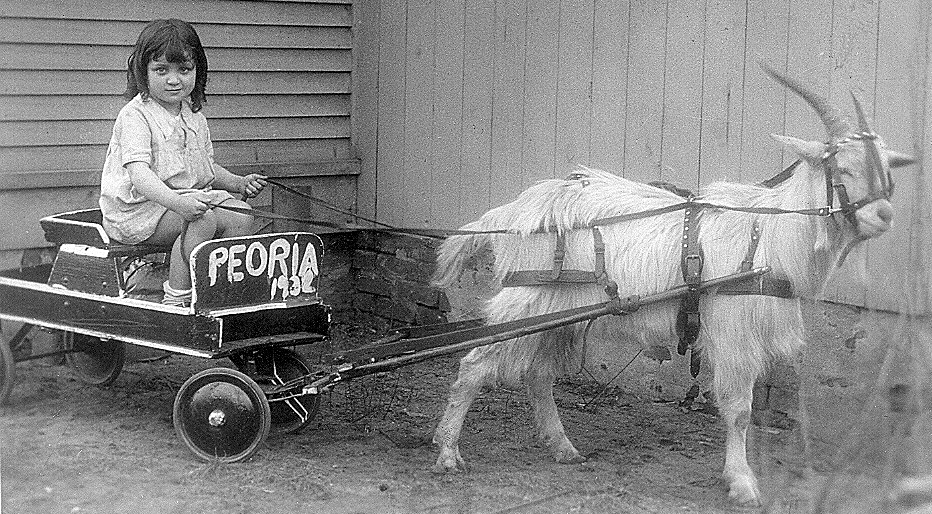
Audrey Salerno, goat and wagon courtesy of  traveling photographer, 1931

Audrey Salerno, goat and wagon courtesy of a traveling photographer, 1932

Find a Reason to Laugh
She laughed a lot and taught us to do the same. She often said, “I’m not laughing at you, I’m laughing with you,” and so we learned to laugh at ourselves, as well. When a traveling photographer brought his goat and wagon to my grandma’s door one summer day, he snapped a photo of my 4-year-old mother wearing a somewhat sly expression. Perhaps she was already planning her next practical joke – something she was very good at in her adult years. 

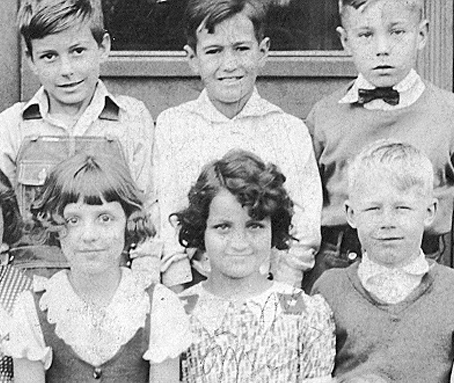
Audrey Salerno, 3rd grade at Garfield Elementary, Peoria, IL, circa 1936

Audrey Salerno, 3rd grade at Garfield Elementary, Peoria, IL, circa 1936

Read & Imagine
As a child, my mother often jumped off her porch roof to strengthen her arms for flying. This is the kind of active imagination she encouraged in her own children (but the pursuit of flight was, oddly, discouraged). With her guidance, I could read by the time I was four years old. She filled our home, our birthday presents, and our Christmas stockings with books. And a gift of a secondhand manual typewriter bridged the gap between my imagination and the stories waiting to flow from my fingertips.

Audrey Salerno, 12 years old

Audrey Salerno, 12 years old

Be Grateful
The Great Depression was a great equalizer. Every country in the world was affected by it. The Salerno’s had it better than some in the 1930s, living in a house that was paid for (built by my great-grandfather) with a yard big enough to grow fist-sized tomatoes and multi-colored bell peppers. Times were still tough — even though she was hungry, my mom couldn’t eat dinner the night my grandma made stew from her pet rabbit. When she had her own children, she made sure we had warm coats in the winter and shoes that fit, and always, always, had food on the table. Because of her I learned to be resourceful, grateful for what I had, and to never waste a crumb of anything.

Audrey Salerno, circa 1943

Hold Your Tongue and Your Temper
My mom taught us the importance of our words and how they affect others. She didn’t gossip, didn’t allow it spoken in the house, and she lived by the rule, “if you can’t say something nice about someone, don’t say anything at all.” You would think with all that crazy Irish-Italian blood running through her veins she would have been hot-headed, but she was just the opposite. She held her temper like no one else could. She was also an expert at holding on to a secret. I was a teenager before she let slip she never received a high school diploma.

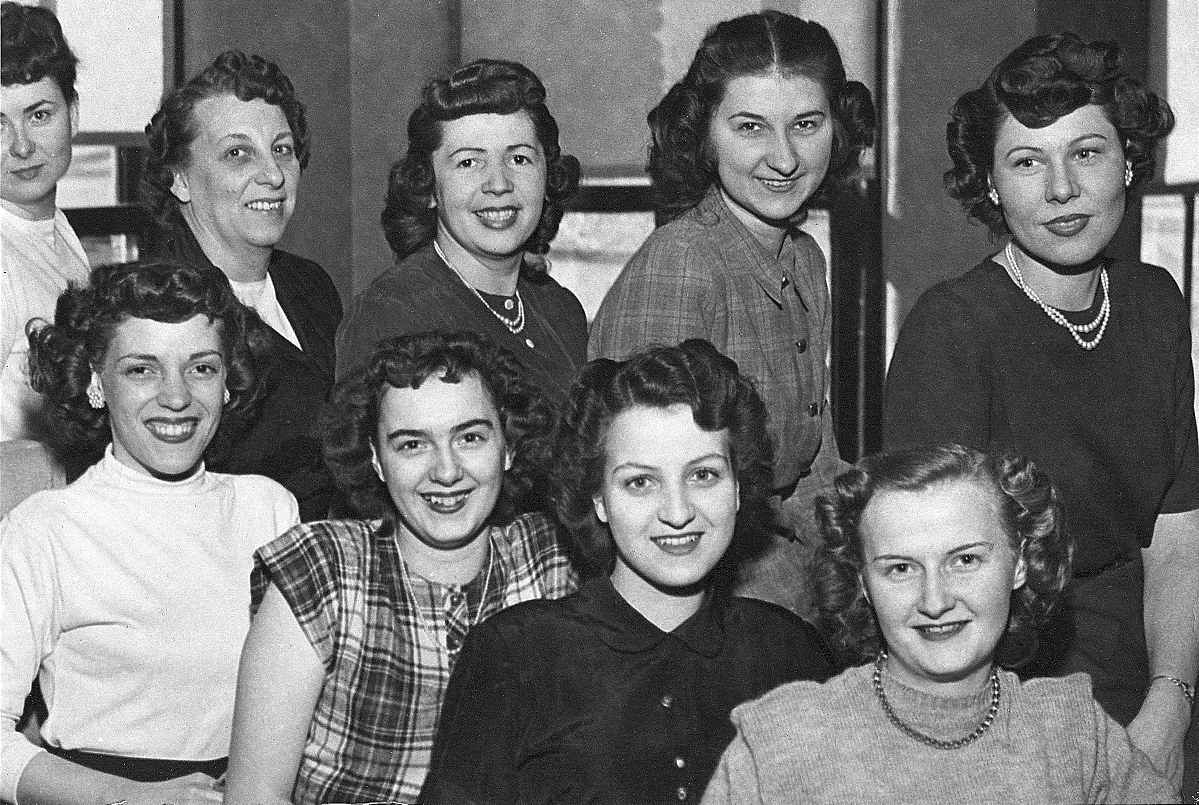
Audrey Salerno w/the girls at Peoria Journal/Star

Audrey Salerno, Peoria Journal/Star, circa 1947

Believe in Yourself
She was 16 years old in 1944 when the world was at war. She grew tired of spending her days in classrooms with “children” much less mature than she and tired of watching life pass her by. Quitting school just seemed the right thing to do. Shy and introverted, she still believed she could do anything she put her mind to. Though she had no skills, she landed a job as a clerk with the Peoria Journal/Star.

Audrey Salerno by Mort Greene, 1947

Audrey Salerno by Mort Greene, 1947

It wasn’t long before the newspaper’s cartoonist Mort Greene became enamored of her, evidenced by gifts of hand-drawn cards, poetry, candy and flowers. Other young women might have jumped at the chance at romance, but my mom had set her mind on something else.

Learn From Your Mistakes
She enrolled in school again, and by the end of 1948 she had received a General Education Development (GED) certificate from Manual Training High School. The war was over by then, but patriotism was still high. Women’s Army Corps (WAC) posters asked, “Are you a girl with a Star-Spangled heart?” She enlisted in 1949, at the age of 21, and went to stenographer’s school.

MomArmy12_2

PVT Audrey Salerno, Ft Leavenworth, KS, 1950

Follow Your Heart
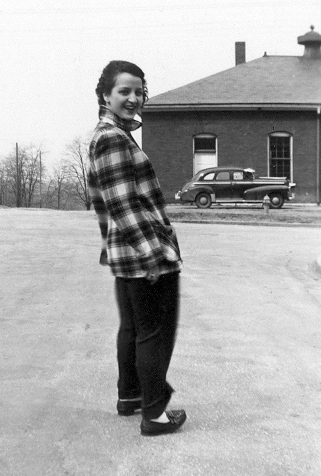
My mom had many suitors in the Army, but it was my dad’s sense of humor that won her over. Within a year of enlisting she had fallen in love with that young Sergeant in the Signal Corps. At the time, women couldn’t stay in the Army after getting married, so PFC Audrey A. Salerno was honorably discharged three days after the ceremony. Today some would bristle at that, but my mom knew her heart and it was the right choice for her. 

Audrey Salerno, 1950

Audrey Salerno, 1950


The Highest Calling
A few days before my mother’s death at the age of 58, I thanked her for being a wonderful mom and asked if she ever regretted giving up her future to raise us. She told me she considered it an honor to be a mother, there was nothing else she would rather have spent her life doing. Of all the things she taught me by example, learning the importance of responsibility and sacrifice has served me the most over the years.

What did you learn from your mom? If any of you had a mother in the military, I’d love to hear her story. And if you recognize someone in these photographs, please leave a comment.


*As it turns out, that child really was trying to insult me, but I like to think he was just passing on what he heard someone else say and had no idea what it meant. Urbandictionary.com says this about that playground taunt: During WWII, prostitutes who followed the troops around, sometimes wore army boots or combat boots.

Mary Haarmeyer Talks Screenwriting, Part II

I ran out of time today and thought I’d reblog this interview from my other website. Mary Haarmeyer is a producer, director and screenwriter who lives in Lovington, New Mexico — she’s also a gracious and down-to-earth person who genuinely cares about others. If you like this second part of her interview, please click on the link in the introduction to read part one.

KL Wagoner's avatarKL Wagoner

Producer, director, and writer Mary Haarmeyer continues her discussion of screenwriting in this second of a two-part interview. Mary has won awards for her scripts since 2007, including first place in the screenplay category of the 2010 SouthWest Writers Annual Writing Competition. Active in the workings of ReelFlicks Productions and T-RO Films, she is currently in post-production of Hunter’s Game, a paranormal/thriller television pilot filmed in New Mexico. Find out more about the series at www.huntersgame.tv and more about Mary and the crew on the T-RO website at www.t-rofilms.com. Click here to read the first part of this interview.

Hunter's Game - Poster2How did producing and directing Hunter’s Game differ from your previous projects?
With this project I wanted to give other striving artists a chance to succeed as well. I’ve been a successful business owner for 29 years and have always been able to figure ways around obstacles. With film, you must…

View original post 867 more words