
A Grateful Heart
Image
Reply

 With Mother’s Day coming up this weekend, I’d like to share the prose poem “The Lanyard” by Billy Collins. My oldest daughter copied this from the Internet in 2005, and I’ve brought it out nearly every year since then to read it over and remember. It’s not the kind of poem you’ll find in a greeting card, but like all good writing it hits home with its truth.
The Lanyard by Billy Collins

 I was recently asked to write an article discussing my creative process in regard to writing. My first thought was, “I have an idea, I visualize it, and then I write.” This eleven-word response doesn’t equal an article no matter how far I stretch each word out on a page. So I began to think more deeply about creativity, where it came from and how it manifests itself in my life.
Creativity needs exercise.
Like most children, my imagination came alive through play. My first memory of such things is of using my hands to interact as characters instead of using dolls. Later I made homes for crazy-haired trolls. GI Joe and Barbie became super heroes. The mesa surrounding my elementary school was the surface of Mars and the swings were my rocket ships. When Star Trek (the tv show) came along, my brother and I took turns playing Kirk and Spock, because they were, you know, the coolest characters in the show.
Outside of play, books were my entertainment early on and, with time, my escape. These stories came alive in my mind, everything playing out as the words formed their images. Then as a young adult in the military – to counter the all-out, flatline boredom of endless hours of waiting – I mastered the art of visualization in creating worlds in my mind filled with characters and their adventures. If you knew me at that time, you probably thought I was merely staring mindlessly into space like everyone else, bored senseless. But I was, instead, living in my waking dreams.
My mind still goes off on its own sometimes, and I’ll blink and realize I’ve been out there in another “dream world.” Piles of books wait at my bedside every night, bookmarks evidence my involvement in each of these worlds. I also have a Kindle that’s filling up nicely. And I love to play with my eight-year-old granddaughter, though I have to stop myself from directing her imagination. Where I want a band of Lego pirates to move through a story from beginning to middle to end, she still delights in throwing her people into one adventure after another without regard to logic or order.
Creativity needs stimulation.
If given the chance, a child will play for hours with dolls or Legos or sticks and dirt. A new toy (or rock) or storybook can ignite a whole new creative world.
I find the simplest things spark my creativity, and usually when I’m not looking for inspiration. While going through my junk mail several years ago, I read about a ministry in the Philippines that addresses the needs of orphans who live in a cemetery. I began to wonder about their lives, and that led to my newest fantasy world and the trilogy I’m working on now called The Last Bonekeeper.
From a writer’s point of view, life experience adds dimension to our creative endeavors. After a certain number of years we all know what rage feels like, and heartbreak. We’ve been hungry and alone. We’ve known the joy of love. Watched people die. For everything in between, observation and study can fill in the gaps. Listening to coffee shop conversations. Walking in the rain. Volunteering at hospitals. Visiting a firing range. Eating new kinds of food. Traveling. Life can stimulate our creativity in practical and immediate ways or at a more subconscious and subtle level. And sometimes, for me, all the brain needs is a bit of rest. I often wake up in the morning with the best story ideas.
Creativity needs an outlet.
If you give young children crayons, they will create something, whether or not you recognize their creation. If you ask them what their squiggles are, they might tell you one is a dog, another is their binky, and a third is Mommy. Maybe in their minds, that’s exactly what they see or maybe it’s what they meant to draw.
An artist just starting out might have an idea in her mind of what she wants to create, but when she goes to sculpt it or draw it or paint it, it doesn’t come out the way she imagines. She might not be ready for years to create that thing she sees in her mind, but she keeps practicing and working at it until one day, there it is emerging from her fingertips.
I think writing often works the same way. When we first start out, what we put on the page isn’t always what we have in mind. There’s something missing. It’s just not right, but the more we practice the better we get. There are times when I have to stop writing because I don’t know how to create a particular scene or portray a character arc. I have to put the manuscript away and come back to it later when time has changed me or practice has improved my technique. Or I’ve studied how other authors approach the same problem.
What makes one person more creative than another?
Maybe we’re all creative in our own way. Some people write, some invent practical gadgets or new ways of doing things. Others take a pile of ingredients and form them into a wonderful meal – actually make it look appetizing and taste great, and enjoy the process while they’re at it. I’m not one of those people. I like to color coordinate my food: chicken + boiled potatoes + corn = yellow!
Creativity can be nourished (and starved). And I think the ability to express creativity can be taught and learned. When I sit down to create worlds, visualization is my foundation – I see characters move through their world, hear their conversations, feel their emotions, and then transfer it onto the page.
So what does your creative process look like? How does it differ from mine?
 I love free stuff. I’ll jump on a free book, no questions asked, even if it’s not a genre I normally read—you never know where a gem might be hiding just waiting to be unearthed. The same is true for writing resources.
There are tons of free resources to be found on the Internet, but here’s a short list of foundational ones that continue to help me in my writing journey.
The Writer’s Manifesto by Jeff Goins is a “small eBook about getting back to the heart of writing…a call for writers to fall back in love with writing for the love of it.” If you’re ready to be inspired to write for the best of reasons, get a free copy of this short, read-in-one-sitting e-book by joining his newsletter list (or pay $.99 on Amazon or Barnes & Noble).
Make Reference.com your first stop on your road to research. Enter your topic in the search bar and watch how much information pops up.
You’ve probably already found Thesaurus.com and Dictionary.com but you may not have discovered WordHippo.com. This site provides definitions and synonyms/antonyms, as well as rhyming words, translations to other languages, word tenses, and pronunciation.
Etymonline.com is an online etymology dictionary. It’s a useful resource to add flavor and accuracy to your writing, to make sure words or phrases were indeed used in a certain place or during a specific time period. Take the noun “stuff.” I thought it was a fairly modern word, but etymonline.com tells me it was used in the 1570s to refer to “matter of an unspecified kind,” whereas usage in the context of “having a grasp on a subject” (to know stuff) isn’t recorded until 1927.
If you’re searching for names for your characters, you could check out a list for boys or girls or you could step out and use one of the many online generators. My favorite is Online Name Generator. Both the Random Name Generator and the Fake Name Generator produce realistic character names. Besides “normal” names, the site also generates ones for elves, pets, bands, clans, businesses, teams, fantasy characters, superheroes, vampires, pirates, as well as evil names and code names.
Redwood’s Medical Edge is a blog by author and RN Jordyn Redwood designed to help both historical and contemporary authors learn methods to write medically accurate fiction. She fields medical questions, analyzes medical scenes, and posts on topics that can increase the tension and conflict in any story. Check out her blog archives for topics.
At Videojug learn lots of things your modern characters might need to know to survive in their world or should know in their particular line of work. Find out about digital photography or dance moves under Creative & Culture, or how to repair fireplaces or stack wood under DIY & Home. For survivalists, go to Sports & Outdoors/Camping/Wilderness Survival to learn How to Make Fishing Nets, How to Hack a Flashlight for Emergency Power, and the all-important How to Survive a Zombie Apocalypse.
Go to Written Sound for “how to write the sound of things: onomatopoeia and words of imitative origin” (like weapons fire or a person choking).
Here’s another one of my favorites – a list of British words not widely used in the United States (okay, I haven’t used this in my own writing, but it’s good to have in case I need it someday, and to help when watching those great British tv shows). Along the same lines is a list of words having different meanings in American and British English.
From The Nighttime Novelist by Joseph Bates. Use this link to download 23 different worksheets to help with things like avoiding clichés and keeping track of description and supporting characters.
From Book in a Month by Victoria Lynn Schmidt. Go here to download more free and helpful worksheets, such as At-A-Glance Outline, Character Sketch, and Character Revealing Scenes.
I limited myself in this post to what I think are the basic resource needs of a writer. I didn’t include any of the awesome websites for writing advice, which I do consider a resource, but I’ll deal with those at a later date.
There are so many free resources on the web to help us with the basics of research and setting up our stories, please comment to share some of your favorites.
(From Vinnie Ann “AJ” Jackson)
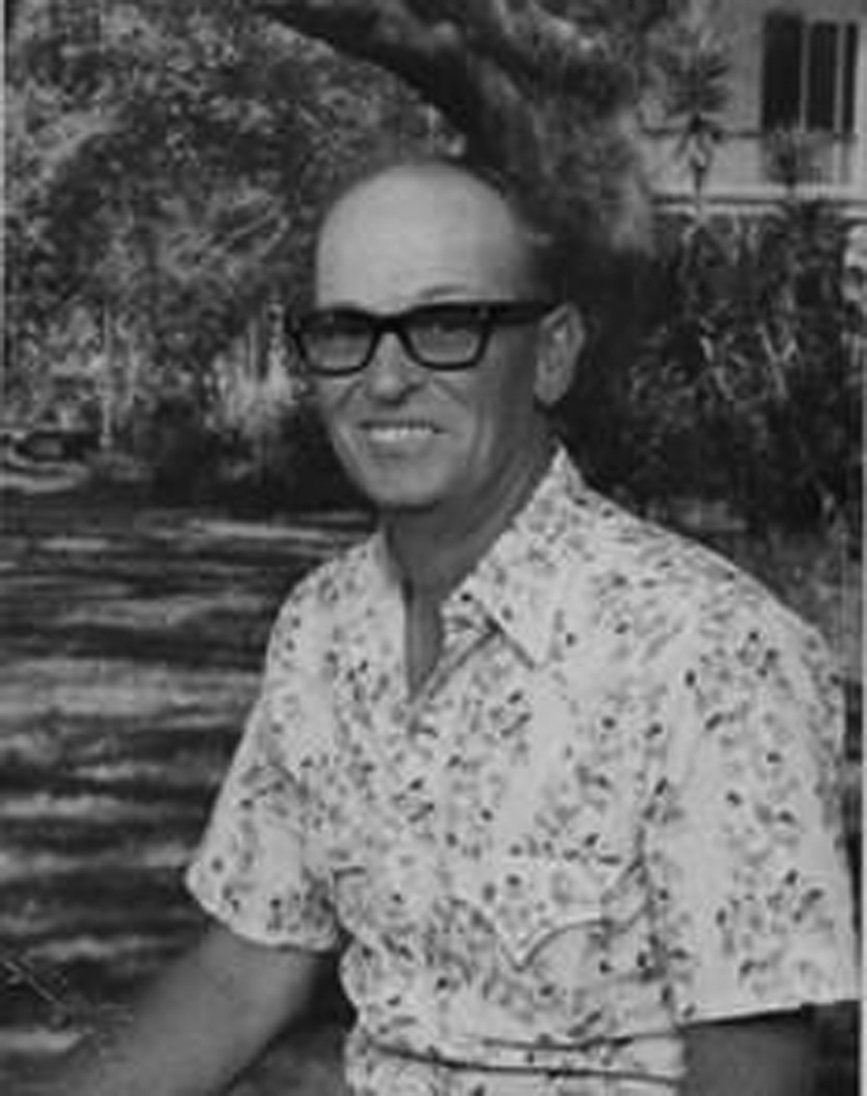 I’d like to dedicate this post to my brother-in-law Charlie Bullock. He passed away at the age of 87 on March 13, 2013, the morning we posted his recipe for cough syrup (also see his remedy for diarrhea relief). He was born and raised in the hills of Alabama, and was a down-to-earth kind of guy with a great sense of humor. I’ll miss him. This photo of Charlie was taken years ago, but I never thought it looked quite like him – he’s wearing his teeth. Charlie carried his teeth in a shirt pocket everywhere he went but hardly ever put them in, even to eat. He grew his own sweet potatoes and one of his favorite desserts was Sweet Potato Pie. Try this recipe out and let us know what you think.
Boil the sweet potato whole (in skin) for 40 – 50 minutes, or until done. Run cold water over the sweet potato and remove the skin.
Cut up the sweet potato in a bowl. Add butter and mix well with a mixer. Stir in sugar, milk, eggs, spices, and vanilla. Beat on medium speed until smooth, and pour the filling into an unbaked pie crust.
Bake at 350° (175° C) for 55 – 60 minutes or until knife inserted in the center comes out clean. The pie will puff up and then sink down as it cools.
The following is an article by Lisa Hase-Jackson originally titled “Five Tips for Retrieving Memories and Developing Your Memoir” and published in the July 2012 issue of SouthWest Sage.
 Writing memoir is the ultimate in “writing what you know.” No one else has as much knowledge or authority on the memoirist’s life than the memoirist herself, and certainly no one else can fully understand or appreciate the complex nature of that life better. But along with this authority comes the challenge of collecting and effectively cultivating memories to create a comprehensive whole.
But memories are intangible and fickle, not to mention ephemeral. Ask someone about what they were doing on a specific date in their past and, unless that date coincides with a significant historical event or personal episode, they will likely draw a blank. But ask a person to recall the time they learned to ride a bike or to discuss their experiences with panhandlers, and suddenly they have memories to spare. Memories may also be triggered unexpectedly by events or conditions in the environment. Consider the moment when a childhood memory becomes suddenly clear while sitting among children at the playground. Or the way a scene in a book causes a similar scene from life to flash before your eyes.
Given the fleeting, transient, and unpredictable nature of memories, how exactly should a memoirist go about capturing them? While carrying a notebook is an important activity for all writers, even diligent writers will find it challenging, if not impossible, to jot down every meaningful moment and detail of her past while still leading a normal life. Fortunately, there are other approaches.
Because memories are encoded in specific ways, certain techniques can be employed to deliberately trigger them, thus giving the writer access to a wealth of material from which to develop her memoirs. Immersion, long recognized as a highly effective way to learn new concepts, is a technique that also works for retrieving memories. And while it is impossible to become literally immersed in the past — that is, one cannot go back and relive Woodstock — a kind of semi-immersion can trigger memories that may otherwise elude the writer. Below is a list of five semi-immersion techniques that have worked for many memoirists:
Revisit locations: Since environment is encoded along with material learned, physically revisiting a location of a past experience can trigger vivid memories. It’s amazing what small details force their way into consciousness given the right impetus. If physically visiting a place of your past is impossible because it is too distant or no longer exists, try visiting a similar space. For example, if your elementary school was razed, consider visiting your child’s or grandchild’s elementary school, which is probably not too dissimilar from your own. You will be surprised how becoming immersed in the world of a child will bring back childhood memories. Likewise, visiting middle schools, high schools, and colleges can effectively trigger adolescent memories of awkwardness as well as teenage and early adulthood angst. Revisiting these memories and experiencing their accompanying emotions may be difficult, but using them to develop scenes in your memoir will make for good writing, and ultimately, good reading.
Revisit the moment: Some physical spaces just cannot exist outside the moment in which a memory was created. For example, it may be nearly impossible to revisit that restaurant in South Korea, or any place remotely similar, where you celebrated your 30th birthday. With luck, however, you have photos and other mementos of the event which you have collected and preserved in a scrapbook (or shoebox). Take an hour to revisit these mementos and allow your mind to ruminate on the experience. Make notes about the details of these memories as they arise.
Recreate the moment: Memories involving other family members or that are linked with an event that occurred before you were born may require a little research. Consider recruiting the assistance of other family members and asking to peruse photo albums and scrapbooks they compiled. Chances are they will be thrilled to share the fruits of their labor with you. Further, the experience will likely spark lively conversations about the past — conversations that will help fill in details you are not yet aware of or have been unclear about for years.
Recreate a similar state of mind or mood: One’s physiological state is also encoded with new experiences. For example, a student who drinks coffee every day before class will recall more information on test day if he drinks coffee right before taking the test. Similarly, when a person feels sad about something, it is easier for him to recall, with vivid detail, other times in his life when he felt sad; much easier, in fact, than trying to recall sad memories when happy. There are many ways to affect mood, including listening to music, meditating, exercising, napping, swimming, or ingesting mood-altering substances. And while I do not advocate irresponsible use of mind-altering substances, remembering Woodstock may be easier when drinking a beer late at night and listening to The Who’s Live at Leeds LP than when sitting in front of the computer in the middle of the afternoon drinking tea and willing those memories to come to mind.
Automatic writing: Automatic writing is an excellent way to immerse yourself mentally in your past and produces the best results when done in a slightly altered state, such as first thing in the morning before you’ve had your coffee or very late at night when you’re too tired to think critically. Other examples of altered consciousness are those that occur after strenuous exercise or deep meditation. Like free-writing, automatic writing involves writing down everything you remember about a memory nonstop for a period of ten or twenty minutes.
Remember, the difference between a good memoir and a great one is development. Utilize these easy, fun techniques to add vivid details and realistic scenes to your memoir today.

Lisa M. Hase-Jackson
Lisa M. Hase-Jackson holds a Master’s Degree in English with an emphasis in poetry from Kansas State University and is a trained Creativity Coach. She has over ten years of experience teaching narrative and nonfiction writing, facilitating workshops in a variety of genres, and supporting writers of all backgrounds and skill levels. Visit her blog at ZingaraPoet.net, which features poet interviews, writing exercises, poetry prompts, articles and poetry picks. She also has a website for 200 New Mexico Poems: 100 Poems Celebrating the Past, 100 More for the Future — a dynamic celebration of New Mexico’s centennial through poetry.
 Dialogue in any kind of story is useful for revealing motives, character, conflict, setting, and important information; as well as for creating tension and suspense, and movement through scenes. While staying true to your memory when writing memoir, you can still produce realistic dialogue by following certain conventions.
In a memoir, can you really recreate pages of dialogue? No. Key phrases may live in your memory, but few [people] can remember word-for-word exchanges. For this type of writing, you’ll have to rely on reconstructed dialogue, but it needs to come up against the standards of good dialogue. ~ Darcy Pattison
Like all of us, your characters’ speech is influenced by their education, family, friends, where they’ve lived, their way of thinking, and the particular circumstances they find themselves in. A teacher will speak one way in front of a group of children, another way with her colleagues, and still another when she’s at home.
The following are basic ways I’ve found to effectively capture interaction between characters through dialogue.
Use Contractions: In modern conversation, people say “don’t” instead of “do not,” unless they’re trying to make a point or for emphasis. “Timmy, don’t touch the skunk.” And then, “Timmy, do not touch that skunk again. Do you understand me?”
Don’t Overuse Names: We might say “Bill, is that a venomous spider on your back?” to get his attention, but when our husband comes home from work, the conversation doesn’t sound like: “How was your day, Bill?” “My day was so-so, Barb, how was yours?” “Well, Bill, I stubbed my toe.”
Avoid Niceties: When people meet or talk on the phone, they might begin with the weather or inquire about each others health, but unless a person is fixated on these things (as part of their personality) or they’re important to the story, skip it. So when Bill comes home from work, instead of asking about his day, Barb might greet him immediately with, “I had the worst day ever. I stubbed my toe.”
Dialect: Writing dialect, and doing it right, is a difficult thing to do. What might sound right to you in the writing – because you know what you’re trying to say and how it sounds in your mind – might not come across to the reader the same way. Pick a few words, like “y’all” and “yonder,” and pepper them in the dialogue for best effect.
Vernacular: As with dialect, common language can be overdone. Include a few words to get the flavor, such as “gonna,” “gotta,” “wanna.”
Here’s an example of dialect and vernacular from Bobbie Christmas*:
The following is the kind of dialect editors do not like: “He ben goin’ ta dat sto’ ever’ day since thin.” It is much better to write in the vernacular – the lingo – of a character’s speech, spelling words correctly, but using the character’s word, as in this rewrite: “He been going to that store ever day since then.”
Beware Exclamation Points: Overusing exclamation points becomes either annoying to the reader or meaningless like white noise. Instead of using an exclamation point every time characters get excited or angry in conversation, show this in their mannerisms or other physical reactions. Use them only when you have to and never more than one per instance. According to author Terry Pratchett, “Five exclamation marks [are] the sure sign of an insane mind.”
Information Dumps: To keep a reader’s attention, large amounts of information should not be imparted all at once in writing, and certainly not through dialogue. When we talk to each other, we don’t usually go on and on about a subject. And when people do, we (as listeners) often tune them out. We don’t want to do that to our reader. Give us important information through description, exposition, in bits and pieces, and break it up naturally in dialogue. Even when making a speech, the speaker will pause to take a drink of water or ask for questions from the audience. A storyteller will pause for affect, catch the eye of listeners, talk with his hands.
Filler Words: People pause when they talk, using words like “ah,” “uh,” and “um.” Sometimes we do this out of habit and sometimes just because we’ve lost our train of thought. Even though this is a natural way of speaking, it fills up space in dialogue and is annoying to read. For a character who speaks with pauses as part of who he is, use these sparingly as you would with dialect and vernacular.
Dialogue Tags/Beats – Tags and beats let us know who is speaking.
Use “said” whenever possible – it doesn’t interfere with the writing because the reader tends to pick up the important information (who’s talking) and skip the “said.” Use another word, such as “whispered” or “shouted,” when it’s not already clear how the character is speaking through word choice or the use of beats (see below).
Insert a dialogue tag where it feels most natural in the conversation, and sooner than later. Waiting until the end of a paragraph can be confusing or distracting to the reader if they don’t know who is speaking. In the first sentence of the next example, the reader doesn’t know who’s talking until the end, and it could make a difference in how the reader imagines the scene: “Well, that certainly is a colorful, venomous spider. Would you like to hold it?” Barb said. Or, “Well,” Barb said, “that certainly is a colorful, venomous spider. Would you like to hold it?”
A beat is a description of a physical action that falls between lines of dialogue. It adds variety and movement to the writing, aids the reader in “seeing” the scene, adds to characterization, and helps with the writer’s work of showing-not-telling. Where you have a beat, you don’t need a tag. Do this: “Look, another colorful, venomous spider.” Barb brushed the creature off Bill’s back. Not this: “Look, another colorful, venomous spider,” Barb said, brushing the creature off Bill’s back.
Paragraph Structure: Give each character in the conversation his own paragraph, even when using dialogue tags or beats or if it’s a one-word or one-sentence paragraph.
For memoir, we rely on our memory to write dialogue, but even having a recorded conversation doesn’t mean it converts smoothly into dialogue. For This New Mountain, I was able to transcribe a recorded interview with AJ Jackson’s mentor that became an entire chapter. This was a real-life, in the moment exchange, but straight transcription wasn’t enough to make it work. I added dialogue tags and beats. I cut filler words and vernacular. And to keep the movement going and spark interest, it was necessary to summarize some of what was said and include additional, relevant information.
Learning how to write good dialogue is a process. And like most kinds of learning, it takes reading and study and practical application. Go out into the world and listen to conversation. When composing dialogue, let it play out in your mind between your characters, and then share the end result with others to get their feedback.
(*Bobbie Christmas/Zebra Communications, the Writers Network News April 2012. For a free newsletter and Tools for Writers go to www.zebraeditor.com/tools_for_writers.shtml.)
What are your suggestions for writing realistic dialogue?
On the field of the self stands a knight and a dragon. You are the knight. Resistance is the dragon. The battle must be fought anew every day. ~ Steven Pressfield
 In my post “You Can’t Finish What You Don’t Start” I talk about how fear and excuses can stop us from starting on a path toward a goal or dream. That post was written in mid-November 2012 during National Novel Writing Month (NaNoWriMo). On the day I wrote it, I had tallied 30,000 words toward finishing the first draft of a fantasy novel. And by the end of November I was a sleep-starved gelatinous mass quivering on my keyboard – having survived the last few days on mounds of chocolate and gallons of Mountain Dew – BUT I finished the race and surpassed the goal of 50k words.
I decided last year that I would never do another NaNo in November, but it’s April now and the memory of that past pain has faded, and National Novel Writing Month’s little sibling has begun. Camp NaNoWriMo is billed as “an idyllic writers retreat, smack-dab in the middle of your crazy life.” And crazy is one word to describe this journey.
On day five of Camp, my resolve is already wavering. I’ve written 4,000 words toward my 30-day goal of 30k words divided between five short stories. It hasn’t been easy, but like anything worth doing, sacrifice is necessary. My house is suffering and my husband is already eating toast and dry cereal for dinner. Between bouts of writing, I work on my lengthy to-do list which includes putting together and editing a 16-page newsletter for my writing organization, plus playing interim webmaster for their website. Let’s not forget that April is tax month – yippee!
What was I thinking when I committed to this? Certainly another month would have been better, less hectic, more convenient…but there is no better month, no better time than now. And what does convenience have to do with following my dreams?
I know I can do this. I survived Army basic training. I raised four children. I’ve dressed the dead (that’s a story for another day). I can do this. But commitment is not all it takes to finish such a project. I realize now, five days into Camp, that I simply didn’t plan ahead well enough. I can’t go back, but there are things I can do from here on out to make sure I finish the race:
I should have been better prepared going into Camp, but I won’t allow myself to use that as an excuse to give up. It takes a lot stronger dragon than that to drive me completely off course. That said, the focus of NaNoWriMo is to encourage writers to do what they long to do – to write. To help us move forward on our writing journey. And as I said in my November post, whatever the final word count ends up being, I will be closer to finishing than if I hadn’t started at all.
What is keeping you from moving forward on a dream? What do you do to stay on course?
Writing a memoir asks for you to dig deep into your biography and come up with scenes that bring a reader into your world fully and inspire them to keep reading – something about you and your story is relevant to their lives. ~ Linda Joy Myers
 One of the most consistent pieces of advice for fiction writers is to hook a reader immediately – if possible, with the first sentence, or at least in the next few paragraphs. If readers don’t feel pulled into the story within the first two or three pages, they may not continue reading. This is certainly true of an agent or publisher reading through their slush pile.
Memoir is a different genre and its readers don’t expect action-packed openings (which aren’t necessarily recommended for fiction either), but the first few pages should still compel us to continue on and immerse ourselves in the story.
One argument against an action opening is that the story hasn’t had time to reveal the characters and who they are. There is no such thing as a story without a character, even if the character is a thunderstorm or a beating heart. And conflict is necessary, because character + opposition = story, but if conflict is introduced too early, it could leave the reader wondering, “Why should I care about what’s happening to the characters?”
Jane Friedman (in “The Biggest Bad Advice About Story Openings”) reveals the importance of including character in the beginning of a story with her list of three things she finds most compelling in a good opening:
According to James Scott Bell (Write Great Fiction: Plot & Structure), there are two more things that the beginning of a novel must do besides (1) hook the reader and compel him to continue farther into the story; (2) establish a bond between the reader and the main character; and (3) introduce the opposition:
Your story world, or setting, will change as the story progresses from scene to scene or moves around in time and place. In the beginning, you should concern yourself with hooking the reader and drawing him in, and not bog down the story with paragraphs of exposition. Your setting could also be its own character or part of the conflict in your story – a parched desert that sucks the life out of you, constant rain that brings heaviness into your life, a bedroom whose tight space feels more like a dungeon than the child’s haven it should be.
It’s also important that your reader trusts you in the journey you’re taking together. You, as the narrator of your memoir, should establish the tone of your story so the reader knows what to expect. Through internal dialogue, word choice, imagery, etc. you will set the mood of your story. The mood will shift, of course, depending on the circumstances the character moves through, but the general tone should be consistent in the way you deal with the story. Will it be a more light-hearted telling, as in My Dog Skip by Willie Morris or the heavier-handed one of The End of the World as We Know It by Robert Goolrick?
You are the main character in your memoir. As important as revealing a character is to a novel, it is even more so to a memoir. Bring the reader into your story. Create curiosity and they will follow where you lead them.
Research the opening sentences, paragraphs, and pages of great novels or memoirs. What are your favorite, most compelling story beginnings?
 Cate Macabe